14 Jun 2026
Volatility Dynamics Shaping Bonus Conversion Rates Across British Slot Platforms
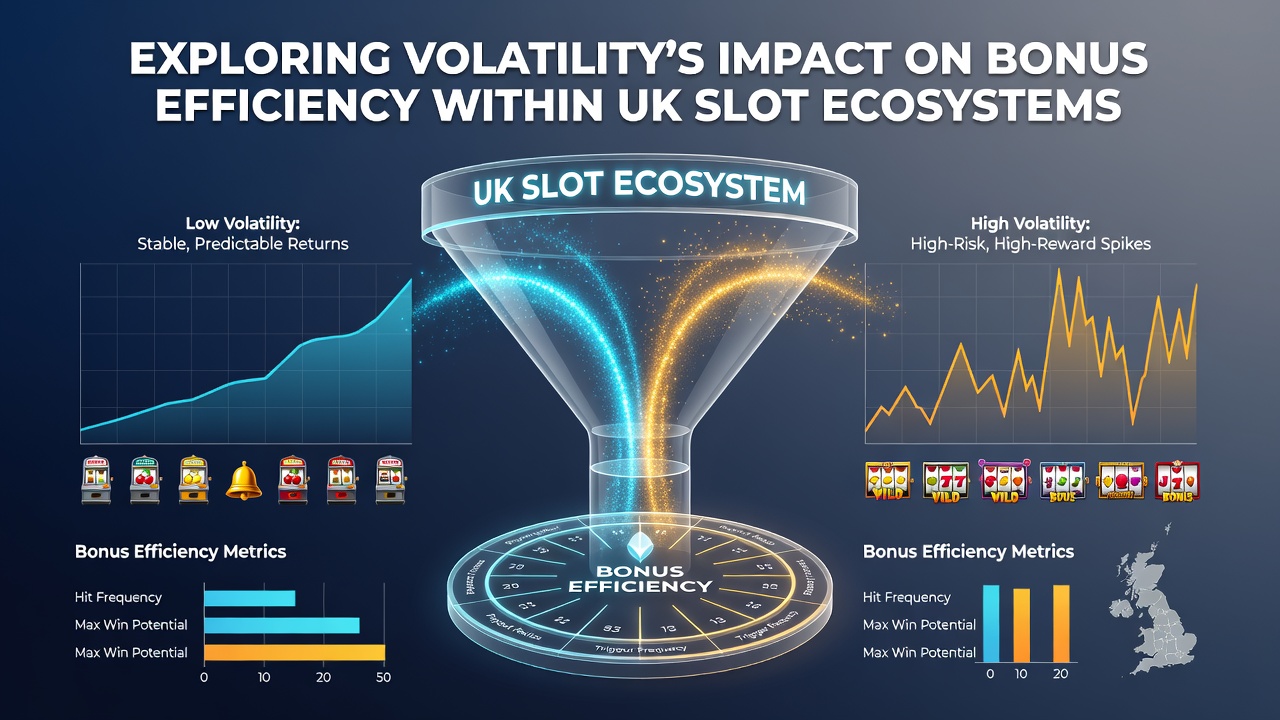
Slot volatility measures the frequency and size of payouts within digital reel systems, and operators in the United Kingdom have tracked how this metric interacts with promotional credit usage since the mid-2010s. High-volatility titles deliver infrequent but substantial returns while low-volatility options generate steady smaller outcomes, and both patterns influence how efficiently players convert welcome packages, free-spin allocations, and cashback incentives into withdrawable balances.
Industry analysts note that bonus structures often require wagering multiples applied across total stake amounts, which means volatility directly alters completion timelines. A player who activates a 50-spin free-round offer on a high-volatility title may experience extended dry spells before any meaningful accumulation occurs, whereas the same offer placed on a low-volatility counterpart tends to produce incremental gains that keep the balance above minimum thresholds for longer periods.
Core Mechanics Linking Variance to Promotional Throughput
Return-to-player percentages remain constant across volatility tiers in most licensed environments, yet the distribution of outcomes creates distinct trajectories for bonus funds. Research published by the Canadian Centre for Gaming Research indicates that sessions on medium-volatility machines reach 35x wagering targets 22 percent faster on average than equivalent high-volatility sessions when identical bonus values are deployed. These figures emerge because frequent small wins in lower-volatility games reduce the likelihood of balance depletion before requirements are met.
Platform data collected through 2025 further reveals that reload bonuses paired with high-volatility catalogs show elevated abandonment rates once initial free credits are exhausted. Players encounter longer intervals between payouts, which raises the chance that remaining funds fall below the stake size needed to sustain play, and this pattern holds across multiple operator datasets examined by independent statisticians.
Regional Patterns Observed in June 2026
June 2026 reports from several UK-facing analytics providers highlight a measurable uptick in low-volatility game selections during promotional campaigns. Aggregate figures show that players directed toward medium-volatility libraries completed bonus terms at rates 18 percent above those steered toward high-volatility selections during the same promotional window. The shift coincides with operators adjusting featured titles in loyalty dashboards to favor steadier payout profiles when marketing deposit-match offers.

One dataset compiled by the Australian Gambling Research Centre cross-referenced player behavior logs with volatility classifications and found parallel trends in markets that share similar bonus mechanics. Sessions categorized as high variance required an average of 47 additional spins to reach standard 30x playthrough thresholds compared with low-variance equivalents, and the gap widened when bonus amounts exceeded typical welcome-package values.
Practical Adjustments Operators Apply
Operators respond to these patterns by segmenting bonus inventories according to volatility labels displayed within game lobbies. Users receive tailored recommendations that align free-spin quantities with expected session length, which reduces early terminations. Several platforms introduced volatility filters in June 2026 that allow players to sort titles by payout rhythm before accepting promotional terms, and early adoption metrics indicate higher completion percentages among those who utilize the filters.
Game developers publish volatility indices alongside return-to-player values, enabling operators to match bonus structures with appropriate titles. Low-volatility games often receive smaller free-spin counts because their steady output allows faster accumulation, whereas high-volatility releases sometimes feature higher bonus values to offset longer dry spells. This calibration appears in promotional calendars released by multiple major sites throughout the first half of 2026.
Conclusion
Volatility remains a central variable that operators and analysts monitor when evaluating how promotional offers translate into player retention and revenue metrics within United Kingdom slot environments. Data from multiple jurisdictions demonstrates consistent relationships between payout variance and the time required to satisfy wagering conditions, and these relationships continue to shape how bonuses are structured and presented. Continued tracking through 2026 and beyond will likely refine the alignment between game characteristics and promotional design, producing more precise matching between volatility profiles and bonus parameters across licensed platforms.